
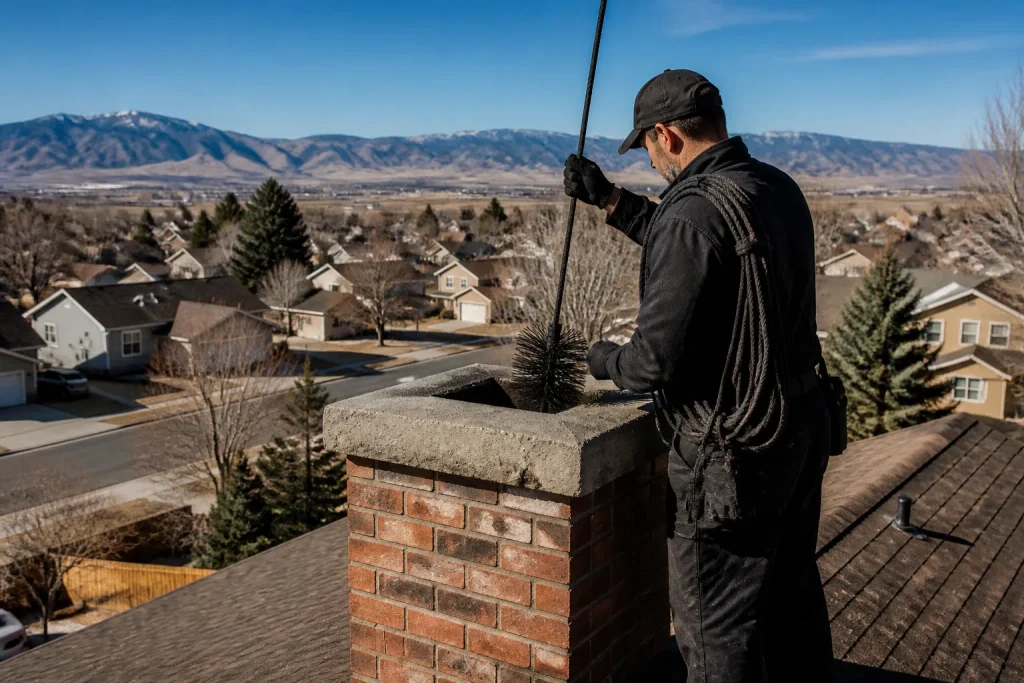
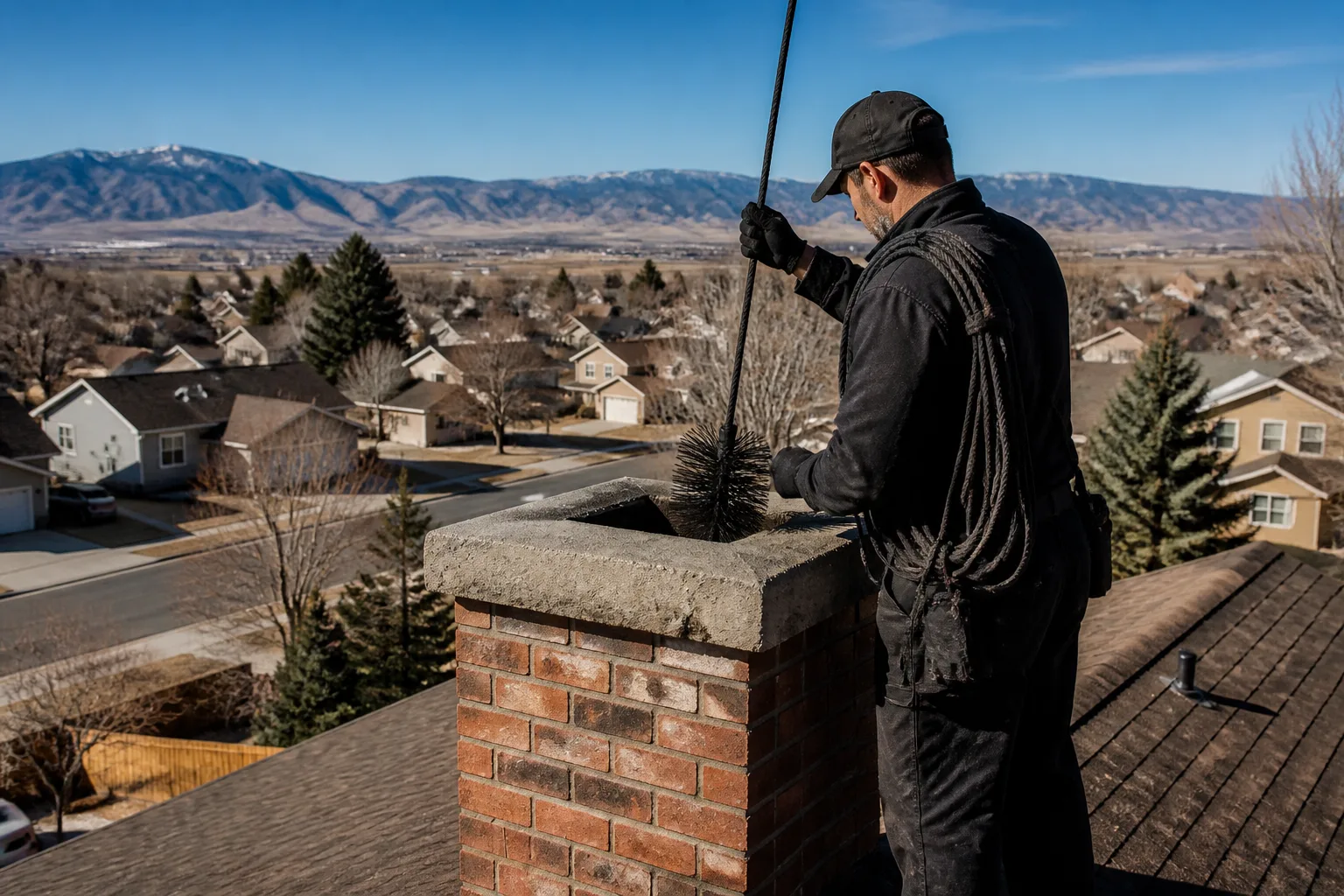
HeatShield Chimney Sweep in Thornton: A Homeowner’s Guide
If a technician recommends HeatShield after your sweep, they’re not trying to sell you a coating. They’ve likely found spalling, joint deterioration, or hairline cracks in your flue that make it non-code-compliant to operate as-is. That distinction matters, because most homeowners hear “liner treatment” and assume it’s an optional add-on. It isn’t. Here’s what HeatShield actually does, when it’s the right call in Thornton, and how to tell a proper installation from a rushed one. If you’d rather not sort this out yourself, call (866) 937-7966 and we’ll take a look.
What Is the HeatShield Resurfacing System, Exactly?
HeatShield is a resurfacing system for clay tile flue liners, not a cleaning product. It’s an EPA-listed, UL-classified cerfractory sealant, which means it’s been tested and listed for use inside a chimney flue under heat conditions. A cerfractory material bonds to the existing tile, fills cracks and gaps, and smooths deteriorated joints back to a continuous surface. The result is a restored liner that insulates and contains combustion gases the way the original clay tile was designed to.
This is the part people miss: HeatShield is applied to restore structural integrity, not to make the flue look nicer. When we run a camera up a Thornton flue and find spalling tile faces, mortar joints that have washed out, or cracks from a previous chimney fire, the liner has lost its ability to safely contain heat and gases. A sweep alone won’t fix that. HeatShield rebuilds the surface back to something solid.
We use HeatShield alongside other professional-grade products like DuraFlex liner systems, Gelco, and Copperfield components. Which one fits your chimney depends entirely on what the camera shows.
When HeatShield Is the Right Fix (and When It Isn’t)
HeatShield works best when the clay tile is still in place but has deteriorated. It is not the answer for every flue, and a reputable technician will tell you so. Here’s how the decision usually breaks down:
- HeatShield is likely the right call when: tile joints have cracked or eroded, tile faces are spalling, the flue has hairline cracks from a chimney fire, or the liner needs a smoother, sealed surface to operate safely again.
- A stainless liner is likely the right call when: tiles are missing or displaced, the flue is unlined, the chimney is being converted to a new appliance, or the existing liner is sized wrong for the fireplace or insert.
The cost difference is real. HeatShield resurfacing generally runs less than a full stainless reline, and it preserves the original clay tile rather than replacing it. The tradeoff is longevity: a properly installed stainless liner has a longer service life, while HeatShield restores the existing tile and extends its useful life rather than replacing it outright. Neither is “better” in the abstract. The camera tells you which one your chimney actually needs.
Why the Freeze-Thaw Cycle Hits Thornton Hard
Thornton sits right where Front Range weather does its most frustrating work. Warm afternoons followed by hard overnight drops push clay tile through repeated freezing and thawing. Moisture gets into a hairline joint during the day, freezes at night, expands, and widens the gap a little more each cycle. Over several seasons, a joint that started as a cosmetic crack becomes a path for heat and gases.
That constant cycling is why we see HeatShield come up more often here than in milder climates. It’s not that Thornton chimneys are worse built. It’s that the local weather stresses them more, and clay tile doesn’t love dramatic temperature swings.
What a Proper HeatShield Job Looks Like
A HeatShield installation is a documented process, not a quick coat. If a technician can’t walk you through these steps, that’s your answer. Here’s what a proper job involves:
- Camera assessment before any work. We run a flue camera to confirm the actual condition and photograph what we find. You see the footage.
- Surface prep. The flue is cleaned and any loose material is removed so the sealant bonds to sound tile.
- Application. The cerfractory sealant is applied to the liner walls and worked into joints and cracks.
- Cure time. The material needs to cure before the flue goes back into service. We’ll tell you exactly how long.
- Camera assessment after. We re-run the camera so you can see the finished surface and we can confirm the result.
- Documentation. You get a written record of the before and after, useful for insurance, a future home sale, or just your own files.
That before-and-after camera work is the whole point. You shouldn’t have to take anyone’s word that the flue is fixed. You should be able to see it.
The Warranty Question: Manufacturer vs. Installer
HeatShield’s warranty comes from the manufacturer, and like most professional-grade product warranties, it depends on correct installation by a qualified technician and proper documentation. The manufacturer covers the material. Your installer covers the workmanship: prep, application, curing, and the final inspection. Both matter, and they cover different things.
What that means in practice: a great product installed poorly doesn’t help you, and a careful installer working with an unsuitable product for your flue won’t either. Ask for the written warranty terms before work starts, and ask who stands behind the labor. If the answer is vague, keep asking.
When to Call a Pro
The flue is the part of your chimney you can’t see, and a HeatShield recommendation is only as good as the camera inspection behind it. We use professional products like HeatShield and DuraFlex because they’re engineered for this specific job, but the material is only half the answer. The other half is an honest assessment of what your chimney actually needs. If you’re in Thornton and want to know whether HeatShield is right for your flue, that’s a conversation worth having before burning season, not after.
For related work, we also handle chimney repair and fireplace repair when the camera shows the problem sits outside the flue itself.
Why a “HeatShield Chimney Sweep” Isn’t One Service
One thing worth clearing up: HeatShield isn’t a cleaning step, and a company that advertises a “HeatShield sweep” is really offering two separate services bundled in one visit. The chimney sweep removes creosote and debris. The HeatShield application is a separate repair, done only if the inspection shows the liner needs it.
That order matters. You can’t properly assess a flue until it’s clean, so the sweep comes first, then the camera, then the recommendation. If someone quotes you HeatShield over the phone before ever looking inside, that’s a red flag. The right process is: clean, inspect, document, recommend. Nothing is justified without footage you can see for yourself, and we’ll tell you plainly when a repair can safely wait until next season.
Our technicians have up to 12 years of experience with this exact sequence, and the full-system view is what Thornton Chimney Sweep Pros is built around. From the firebox to the crown, one specialist handles the sweep, the inspection, and any repair the camera justifies.
The Bottom Line
HeatShield is a resurfacing system for deteriorated clay tile, not a cleaning product or a sales add-on. It’s the right call when the tile is still in place but has spalled, cracked, or lost its joints. It’s the wrong call when tiles are missing or the flue needs a full stainless reline. Thornton’s freeze-thaw cycle makes liner deterioration more common here than in milder climates, which is why this conversation comes up more often than you’d expect.
The short version: clean first, inspect with a camera, and only then recommend. If you’re in Thornton and need help sorting out whether HeatShield is right for your chimney, Thornton Chimney Sweep Pros offers free estimates – call (866) 937-7966. We answer 24/7. Fast dispatch from 7am to 7pm, Sunday through Friday.
Frequently Asked Questions
No. It’s a cerfractory resurfacing system that bonds to the tile and fills cracks and joints to restore the liner’s integrity. It’s an EPA-listed, UL-classified material, applied as a repair, not a cosmetic topcoat.
Generally, yes. HeatShield resurfacing typically runs less than a full stainless reline because it restores the existing clay tile rather than replacing it. A stainless liner has a longer service life, so the right choice depends on what the camera shows. Call (866) 937-7966 for an exact quote – estimates are free.
A properly applied HeatShield restoration is designed to extend the life of the clay tile liner, and its durability depends on correct prep, application, and curing. We document the before-and-after on camera so you know exactly what was done.
Front Range freeze-thaw cycles push clay tile through repeated freezing and thawing, which widens cracks and erodes joints faster than a stable climate. That weather pattern is the main reason liner deterioration shows up here so often. Call (866) 937-7966 for a free estimate – we’ll show you what the camera finds.
Written by the team at Thornton Chimney Sweep Pros.
Need Chimney Cleaning Help?
Call Thornton Chimney Sweep Pros - the local pro we connect you with is licensed and insured, here with fast help in Thornton.
(866) 937-7966