
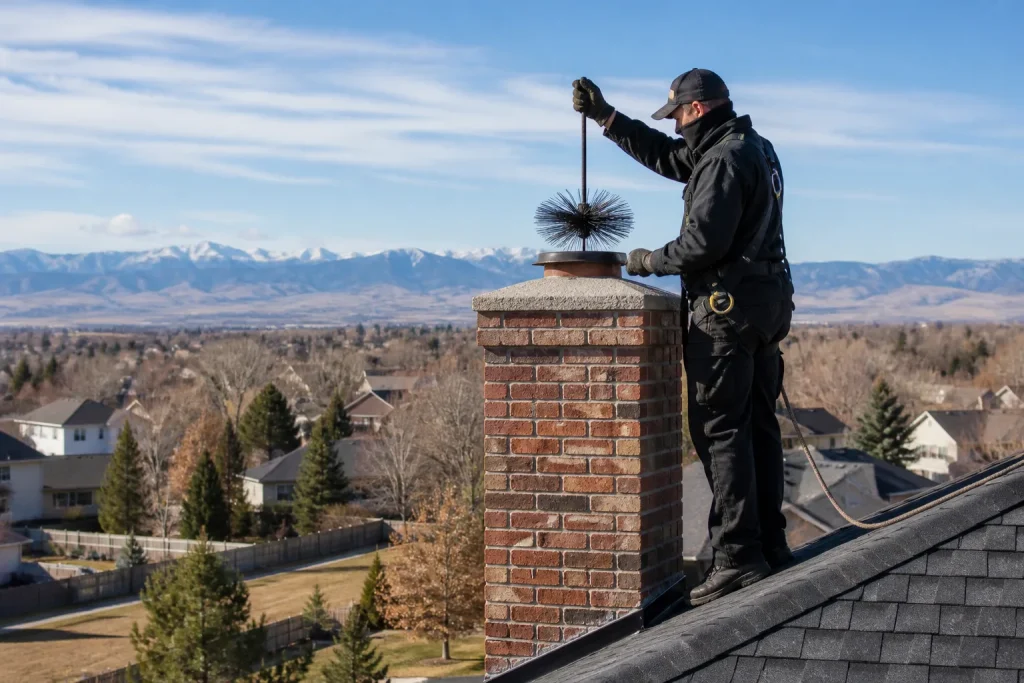
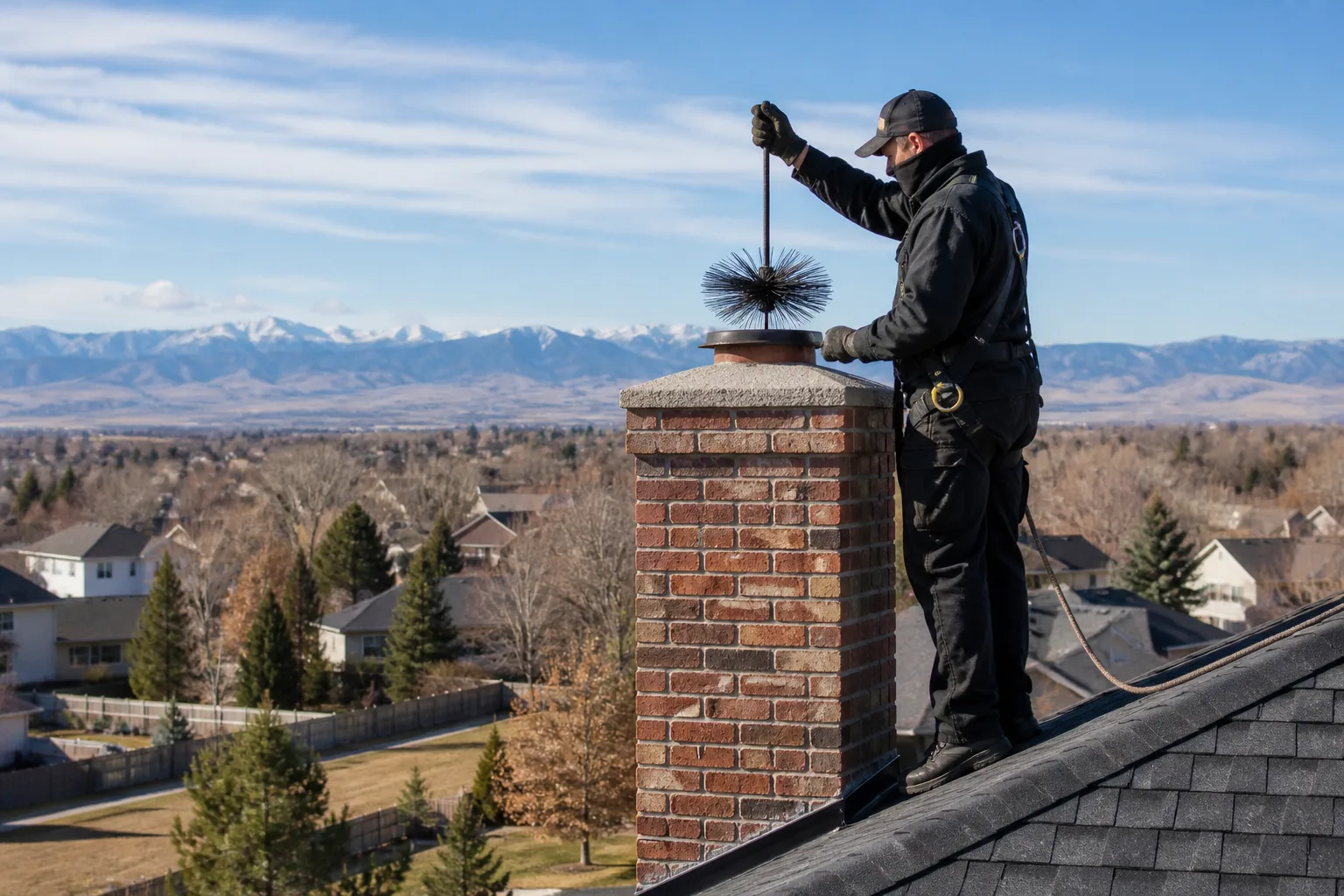
DuraFlex Chimney Sweep in Thornton: A Homeowner’s Guide
DuraFlex is a corrugated stainless steel chimney liner system built for flues that won’t accept a rigid pipe: offset flues, irregular clay tile, and retrofit appliances. It’s the right call for those conditions and overkill for a straight, sound chimney where rigid liner works fine for less. The difference matters before you agree to the work, and understanding what DuraFlex actually does is where every Thornton homeowner should start. If you’d rather have a specialist sort out which liner fits your chimney, call (866) 937-7966.
Key Takeaways
- DuraFlex is flexible corrugated stainless liner, engineered to navigate bends that rigid liner can’t.
- It’s the correct choice for offset flues, pre-1980 Thornton chimneys with irregular clay tile, and many gas appliance retrofits.
- A rigid or semi-rigid liner often performs better (and costs less, sometimes around $400 less) on straight, well-shaped flues.
- Every liner still needs correct sizing to the appliance and a compatible cap on top.
- Corrugation holds creosote differently than smooth wall, so cleaning intervals and sweep technique change.
What Is a DuraFlex Chimney Liner and How Is It Different?
A DuraFlex liner is a continuous length of flexible, corrugated stainless steel tube that slides down a chimney flue and connects your appliance to the termination at the top. It’s made to flex, and that’s the entire point. Rigid stainless liner is smooth-walled and excellent on airflow, but it comes in straight sections joined at seams and it cannot make a sharp turn through an offset without fittings that complicate the install and reduce performance.
The trade-off is airflow. Corrugation creates tiny ridges that disturb the smooth column of rising smoke, which slightly increases resistance compared to a smooth-wall rigid liner of the same diameter. For most wood-burning fireplaces in Thornton that difference is negligible when the liner is properly sized. What corrugation does change is creosote. Soot and creosote catch along those ridges more readily than on a smooth surface, especially in a cool flue. That’s not a reason to avoid DuraFlex; it’s a reason to clean it on schedule.
In our experience the choice between flexible and rigid comes down to the shape of the chimney, not the size of the budget. We install DuraFlex liner systems where the geometry demands it, and we’ll tell you plainly when a rigid liner does the same job for less.
When Is DuraFlex the Right Choice for a Thornton Chimney?
DuraFlex is the technically correct answer in three common Thornton situations. If your chimney fits one of these, the flexible approach is usually the only sensible option, not a premium upsell.
- Multi-offset flues. Older homes around Thornton frequently have flues that jog around framing or structural features. A rigid liner can’t navigate a hard offset without extra fittings and a wider chase; a DuraFlex liner threads through the bends in one continuous piece.
- Pre-1980 chimneys with irregular clay tile. Clay tile liners from that era are often out of round, cracked, or bedded with mortar that protrudes into the flue. A flexible liner conforms around those irregularities. Rigid liner can hang up on the same obstacles.
- Gas appliance retrofits. When a furnace, water heater, or gas insert is added to an existing flue, the new appliance has different venting demands than the original fireplace. DuraFlex lets a properly sized liner go in through a flue that a rigid pipe couldn’t pass.
There’s a fourth case worth naming: chimneys where the existing flue is undersized for the appliance. A flexible liner in the correct diameter can restore safe draft where the old flue was too large or too small. Sizing is never guesswork; it’s calculated from the appliance’s BTU output. A liner too small for the appliance chokes draft, and a liner too large cools the exhaust before it exits the top.
When a Rigid Liner Beats DuraFlex (and Why You Should Hear It From Us)
DuraFlex is not the default. On a straight, well-shaped flue with sound clay tile, a smooth-wall rigid stainless liner usually does the job with better airflow and less creosote accumulation, and it frequently costs less, sometimes roughly $400 less on a comparable job. Semi-rigid liner can also be the better fit on a gently shaped flue where you want some flexibility without the corrugation penalty.
Why would a full-system specialist tell you that? Because recommending premium products on every job is how a contractor earns a short-term invoice and loses a homeowner who later finds out a simpler liner would have worked. We’d rather explain the trade-off and let you decide. Here’s the general rule of thumb:
- Straight, uniform flue, no offsets: rigid or semi-rigid liner is typically the strongest performer.
- Offsets, irregularities, or a retrofit: DuraFlex is the practical choice.
- Unsure: a documented inspection answers it, and the camera footage shows you exactly what the flue looks like from top to bottom.
A certified inspection documents exactly what your chimney needs, nothing more. When the report comes back, the liner type follows the flue condition, not the sales target. If the fireplace itself also needs work, that’s a separate conversation; our fireplace repair service covers the firebox and damper side of the system.
How Is a DuraFlex Liner Installed Correctly?
A DuraFlex install is only as good as the three things contractors get wrong: sizing, top termination, and the connection at the appliance. Get those right and the liner performs for the life of the chimney. Skip one and you’ve bought a liner that drafts poorly or fills with creosote ahead of schedule.
Sizing to the appliance
The liner diameter is calculated from the appliance’s BTU output and the height and shape of the flue. A wood fireplace, a gas furnace, and a pellet stove each have different requirements, so the same house can take different liner sizes. The inspection and a quick appliance review settle it before any material is ordered.
Termination at the top
A DuraFlex liner still needs a compatible chimney cap. The cap keeps rain, animals, and debris out of the flue and provides the correct termination for the liner’s stainless steel. An improvised or mismatched cap is one of the most common causes of water intrusion and decay we find on Thornton chimneys. The right cap is sized to the liner, not the old flue opening.
The appliance connector
At the bottom, the liner has to connect to the appliance connector or insert collar with a properly sized adapter. Loose fits let smoke leak into the room and undermine draft. When the liner and appliance come together cleanly, the whole system behaves the way it was designed.
Caps and crowns protect the chimney from the top down, and our chimney repair team handles both when the liner work is done. We stock and install DuraFlex along with brands like Olympia Chimney and Gelco, so the components match.
Does DuraFlex Change How Often You Need a Sweep?
Yes, in a small but meaningful way. The corrugation on a DuraFlex liner catches creosote along its ridges more readily than a smooth-wall rigid liner does, especially in a cool or oversized flue. That doesn’t mean you need a sweep every month, but it does mean the inspection matters. Chimney fires start when creosote builds past a couple of millimeters; on a corrugated liner that buildup is harder to eyeball from the firebox, so a camera sweep is the reliable way to know.
What a sweep looks for on a flex liner is different from a rigid one:
- Creosote accumulation along the corrugation ridges, which needs a properly sized brush to clear.
- Signs of abrasion or damage at the offset bends, where the liner flexes most.
- The tightness of the top termination and cap fit.
- The integrity of the bottom connector, which can loosen over time.
Most wood-burning households can plan a sweep once a year, or more often if you burn heavily or use unseasoned wood. A gas appliance liner generally needs less frequent attention but still benefits from an annual inspection. DuraFlex doesn’t remove the need to clean; it just changes what a sweep looks for and how careful the cleaning has to be.
When to Call a Pro
A liner is a safety component. Creosote buildup on any liner, flexible or rigid, is a chimney fire waiting to happen, and a poorly sized liner can push carbon monoxide back into the home. Neither is a job for a homeowner with a brush and a ladder. What you can do is call a specialist for a documented inspection and a sweep. If your flue runs straight and sound, we’ll tell you rigid liner is enough. If it’s offset or irregular, we’ll explain why DuraFlex is the answer and size it correctly. Related services in Thornton: our chimney sweep clears the flue, and a full inspection tells you whether relining is even necessary. If you’d rather have us look at it, call (866) 937-7966. We answer 24/7. Fast dispatch from 7am to 7pm, Sunday through Friday.
The Bottom Line
DuraFlex is the right liner for a specific set of Thornton chimney conditions: offset flues, pre-1980 tile that’s out of round, and gas appliance retrofits. On a straight, sound flue a rigid liner often performs better and costs less, and a specialist who knows the difference will tell you so. What every liner needs, no matter the type, is correct sizing to the appliance, a compatible cap at the top, and a clean bottom connector. That’s what separates a safe, long-lasting system from a liner that was simply fitted and forgotten.
If you’re in Thornton and need help, Thornton Chimney Sweep Pros offers free estimates, call (866) 937-7966. Every recommendation comes with camera evidence you can see yourself, the written estimate sets the final price, and the local pro doing the work is licensed and insured as their state requires. Start with our site, Thornton Chimney Sweep Pros, to see the full range of services, or call and we’ll book an inspection.
Frequently Asked Questions
A DuraFlex liner is a flexible, corrugated stainless steel chimney liner designed for flues that rigid pipe can’t navigate, such as offset or irregular flues. It protects the chimney from heat and creosote while channeling exhaust out the top. Call (866) 937-7966 for a free estimate on whether your Thornton chimney needs one.
Not always. DuraFlex is better on offset or irregular flues and gas retrofits; a rigid or semi-rigid smooth-wall liner is often better on straight, uniform flues because it has less airflow resistance. The right choice depends on your flue’s shape and the appliance it serves. Call (866) 937-7966 and we’ll inspect and tell you honestly.
Most wood-burning households need a sweep once a year, or more often if you burn heavily or use unseasoned wood. Corrugation catches creosote on the ridges, so an annual camera inspection is the reliable way to catch buildup before it becomes a risk. Call (866) 937-7966 to book a sweep.
We don’t recommend it. A liner has to be sized to your appliance’s BTU output, fitted with the correct termination and cap, and connected properly at the bottom, and a mistake in any of these can create a fire or carbon monoxide hazard. A professional installation protects you and your home. Call (866) 937-7966 for a free estimate.
Written by the team at Thornton Chimney Sweep Pros.
Need Chimney Cleaning Help?
Call Thornton Chimney Sweep Pros - the local pro we connect you with is licensed and insured, here with fast help in Thornton.
(866) 937-7966